
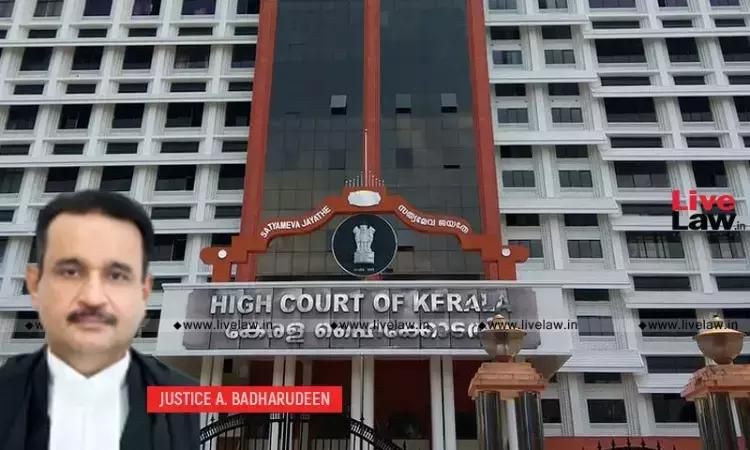
Kerala HC: Potency Test on POCSO Accused Without Consent Legal, No Privacy Breach
The Kerala High Court has ruled that a potency test can be conducted on an accused person in a criminal case without his consent, stating it does not violate Article 21 of the Indian Constitution. The ruling came while dismissing an appeal by a man convicted under the POCSO Act and IPC.
A. Badharudeen rejected the argument that such a test infringes on the right to privacy and bodily integrity. The court confirmed that such tests are legally permissible without the accused's consent and do not breach constitutional protections.
The appellant had been convicted under Section 7 and 8 of the POCSO Act for offences against a 17-year-old victim. He was sentenced to three years' imprisonment and a fine of Rs 10,000. His conviction was also based on charges under Section 376(2)(n) of the IPC.
The accused challenged his conviction on several grounds. He argued that the victim's testimony lacked corroboration, with contradictions in her statements. He also challenged the POCSO Act's age limit of 18 as unconstitutional, and claimed he received ineffective legal assistance during trial. Another ground was that his potency test was conducted without informed consent.
The court examined the victim's testimony and other evidence. While some parts of her statement were challenged, her account of sexual acts excluding intercourse remained unchallenged during cross-examination. The court stated that evidence from a hostile witness cannot be entirely discarded.
The prosecution proved the victim's minority through a birth certificate issued by the Panchayat Secretary. The court upheld the conviction and the minimum three-year sentence. It dismissed all grounds of appeal, including the privacy and ineffective counsel claims, noting the accused had legal representation of his choice.
More High Court Updates News


Enjoying TindPosting?
Get the app for a faster, personalized news experience.